Qingdun Relic Site
Introduction
The Qingdun Relic Site, located in Qingdun village, Hai'an county, Jiangsu province, is a significant 70,000-square-meter Neolithic archaeological site. It offers valuable insights into ancient Jianghuai Plain cultures, with well-preserved relics that enhance understanding of early human civilization. The Qingdun Relic Site is a vital archaeological treasure that provides a window into the distant past of the Jianghuai Plain.
History
Discovery
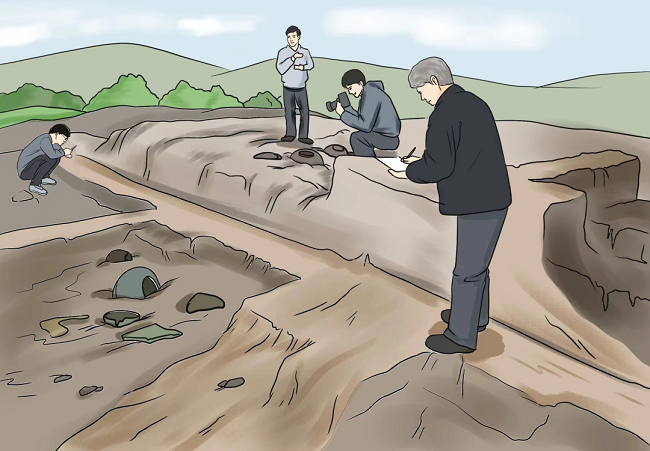
The Qingdun Relic Site was first unearthed in 1973, marking a significant discovery in the field of archaeology. This initial finding piqued the interest of experts from the Nantong Museum and the Nanjing Museum, prompting a series of archaeological excavations that took place over a three-year period from 1977 to 1979. Despite the extensive area of the site, only a small fraction—less than one percent—has been excavated so far. The discovery of the site provided a vital link to understanding the Neolithic Age in the Jianghuai Plain, revealing a wealth of cultural relics that reflect the sophisticated craftsmanship and cultural practices of the period.
Excavation
The archaeological excavations at Qingdun revealed relics that can be divided into three distinct phases. The first and second phases yielded an abundance of cultural artifacts associated with the Jianghuai Plain culture, highlighting the rich and varied history of the region. In the third phase, the relics not only continued to reflect the Jianghuai Plain culture but also exhibited elements of the early Liangzhu Culture from the Jiangnan region and the Dawenkou Culture from the northern area of the Huaihe River. Among the most significant architectural discoveries at the site is the earliest and most intact example of stilt-style architecture found in the eastern Jianghuai Plain, showcasing the advanced building techniques of the time.
Archaeological Significance
Artifacts Found
The Qingdun Relic Site is renowned for its diverse and valuable artifacts, which have provided invaluable insights into the Neolithic Age. Notable among these finds is the earthenware axe with a handle, which has been categorized as a first-class cultural relic in China due to its exceptional craftsmanship and historical importance. Another significant artifact is a deer horn adorned with Eight-Diagram patterns, representing one of the earliest known examples of Eight Diagrams, an ancient Chinese philosophical system used to explain natural and social phenomena. The discovery of carbonized rice at Qingdun further underscores the site's importance, as it supports the theory that rice originated in China, following similar findings at the Hemudu relics.
Cultural Impact
The Qingdun Relic Site holds profound cultural importance, as it provides a tangible link to the ancient cultures that once thrived in the Jianghuai Plain region. The artifacts and architectural remains unearthed at the site reflect a rich cultural heritage, offering insights into the social, economic, and technological developments of that era. The site's recognition as a key cultural relic under national protection in 2006 underscores its significance in preserving China's historical and cultural legacy. In 2019, the establishment of the Qingdun Relic Site Museum by the Hai'an government further emphasized the importance of the site, as it serves to educate the public and promote the long history and profound culture encapsulated in the relics unearthed at Qingdun.








